

We at Inyathelo believe that there are resources available to the civil society sector, but organisations and their leaders need to attract these resources, rather than chase money. They need to put in place effective advancement practice including good governance, quality leadership, good financial management, functioning programmes that deliver on their objectives, monitoring and evaluation; they need to be visible and let the world know what they think and do; they need to be clear where they are going, what they want to achieve and how they will do it. They cannot rely on proposal writing as the first port of call. This standard way of raising money is probably the least effective and I am always amazed that people continue with a practice that doesn’t work. There is no silver bullet – the bottom line is that organisational leadership has to build relationships and this takes time and effort.
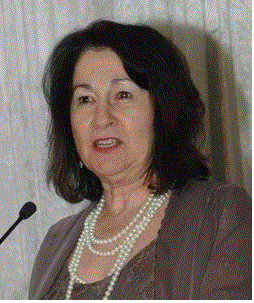
Shelagh Gastrow Executive Director, Inyathelo – Institute for the Advancement of Philanthropy
There are huge opportunities for the corporate sector to work with civil society, but there should be clear guidelines for good partnerships between the two. For corporates, these include :
- Ensuring that your objectives dovetail and that you are not forcing an organisation to change course to where it doesn’t want to go or where it doesn’t have the skills sets to go. This will invariably end in a sad way.
- Respect your partner’s knowledge in its field of endeavor and in the community in which it works.
- Whilst sharing skills can be enormously helpful, there is no purpose in trying to micro-manage a partner organisation. Besides being bad manners, it can undermine what both parties are trying to achieve.
- Understand that social change takes time. Immediate impact in the social sphere is unlikely.
- Make a contribution to overheads. Organisations cannot function without overheads. Companies would not dream of running without offices, equipment, marketing and staff. So goes the NGO. Each project has to pay its way in the organisation including oversight, governance, rental, supplies, equipment etc.
- Make a contribution towards building the capacity of your partner organisations. No business would dream of eliminating staff training and resources from its budget. So goes the NGO.
- Don’t be judgmental about costs such as salaries. There is no reason why people running NGOs should live on a pittance. They are professionals in their own right and are partners with the corporate sector. Don’t revert to the charitable paradigm and reduce them to beggars. It is humiliating to use the power game because the funds come from the corporate entity. These organisations are enabling the corporate sector to undertake interventions that they simply cannot do themselves.
- Be clear about how you exit a relationship. A warning is not an exit strategy. Companies could open doors to other donors; provide training and capacity building in fundraising and development; contribute towards an endowment. If you have a long term relationship, it is unethical to stop support suddenly.
- Make a medium to long term commitment. Organisations cannot make guarantees that their work will endure if they need to continually resubmit requests for support on an annual basis. This insecurity leads to staff losses, and an inability to plan for the future.
- Do your due diligence. Before investing in an organisation, ensure that it is sustainable, that it has the skills required to undertake its projects and that you are confident and have trust in its leadership. This means that companies need to know their partners and that this is not just a paper relationship. Meet with the Director, visit their offices. The state of their working environment will tell you immediately if the organisation is well managed or not.
- Understand that reserve funds and endowments are a good thing. The argument that an organisation has a reserve and therefore doesn’t require funding is spurious. What this actually means is that the organisation will be there to carry out its objectives if things go wrong financially. Because non-profit donor income is subject to the whims of donors, it is good practice to build a reserve to see the organisation through transitions. Donors who object to an organisation’s financial success are operating in a patronizing, charitable paradigm – expecting professionalism, yet abandoning their own business principles in the case of non-profit organisations.
For non-profits there are also some basic rules :
- Do not assume that a donor is obliged to fund you. You need to attract funds from partners that share your objectives and hopefully values.
- Build relationships based on trust and be transparent. This takes time and your Executive Director needs to find this time.
- Ensure that your objectives dovetail with the objectives of your corporate partner and that any outcome indicators are agreed.
- Don’t be swayed into mission drift because there is money involved.
- Ensure that you have a good paper trail and can account for all funds.
- Put effective thanking and reporting systems in place.
- Stick to your contracts and report on time, both narrative and financial.
- Recognise your corporate partner, both privately and publicly. Starting with a thank you letter, this can extend to a recognition event, a certificate of recognition, the naming of space, a plaque on a wall and publicity in your annual report and website.
- Bring your partner into the organisation – share your achievements.
- Continually monitor your programmes and projects, find the places you can improve and share this knowledge with your donor. Be proactive about evaluations – engage with the donor about what they would like to know in the process and share what you would like to learn.
- Inform your partner immediately if things go wrong – you don’t want them to hear about this from other sources. Be open and honest – we are all human.
- Understand that your champion in the company, such as the CSI officer, is accountable to his/her board. Your failures reflect on him/her. It is therefore important to maintain a transparent relationship and to answer questions that need to be asked.
Courtesy: http://www.inyathelo.org.za/in-our-view/742-the-ngo-landscape.html?utm_source=GraphicMail&utm_medium=email&utm_term=NewsletterLink&utm_campaign=PSA+June+Two+2013&utm_content=
Advice to NGO’s
04
Jun